Kara Swisher, Ads, and Wellness
A journalist with big podcasts swerves out of her lane, crashes into a grift or two
Kara Swisher is a strong tech journalist and media personality known for her sunglasses, coverage of Silicon Valley’s denizens, and impatience with bullshit.
As Big Tech billionaires like Ellison, Zuckerberg, and Bezos have aged, they’ve used their massive fortunes to try to find ways to fend off aging or death. It’s not working, but it has spawned a movement due to their well-funded irrationality.
Tech’s new focus on health and longevity has drawn Swisher out of her lane and into the wellness industry, where her coverage is on less sure footing and her contacts are less robust. (Swisher also currently has a series on the wellness industry running on CNN.)
Swisher’s industry-leading podcasts naturally run ads, with many of them voiced by the hosts — either her or, when it involves her Pivot podcast, her co-host Scott Galloway.
Podcasts get a premium for these host-read ads.
- The new RFK, Jr., podcast might not, for obvious reasons.
Yesterday, for her On podcast, Swisher discussed various aspects of the wellness industry with Katie Couric, Amy Larocca (a fashion journalist who saw that industry pivot to wellness so she wrote a book called How To Be Well: Navigating Our Self-Care Epidemic, One Dubious Cure At A Time), and Swisher’s brother, Jeff Swisher (an anesthesiologist).
It’s not the best panel one might imagine for the topic, especially after they spend a little time decrying a lack of respect for expertise, but there you have it. All I can say is that having become quite familiar with the space over the past two years, there are better options.
During the discussion, which veered from anecdotes to speculation and back again, further muddying the waters in ways that benefit health misinformation itself, an ad ran for IQ Bar, a food company predicated on the notion that there are “brain nutrients” and “body nutrients” while pushing the idea of intelligence and IQ in its branding and copy.
Swisher read the ad, complete with a custom “K-A-R-A” discount code:

IQ is a problematic topic for a variety of reasons in both Silicon Valley and the MAHA movement. It is tied to eugenics, it is not a valid measure of anything except perhaps as a proxy for an SAT or ACT exam (and they a proxy for it), and is not a vital sign physicians use.
IQ Bars have ingredients like lion’s mane (the mushroom, not the jelly fish), natural caffeine (as opposed to that not occurring in nature), and the ever-flexible “adaptogens” (might as well be “magic beans”).
Pushing IQ Bars on an episode about “healthcare misinformation” is pretty rich.
This is nothing new for Swisher, because supplements and nutraceuticals love to use podcasts. Most memorably, she and Galloway were once big into Athletic Greens, now known as AG1, a company that built its marketing on two pillars:
- Special issues in MDPI and Frontiers journals edited by an employee with articles authored by employees to create scientific-seeming citations
- Podcast and social media advertising
AG1 podcast advertising at one point covered 14,000 episodes across nearly 800 podcasts. AG1 spent $2.2 million per month on these ads.
Swisher and Galloway were both pushing AG1 on their podcasts for months as the ad money came in. When the ads dried up, it seemed so did their advocacy.
Fast-forward, and Swisher is representing herself on CNN and in her podcast as a “truth teller” when it comes to wellness grifts and unproven therapies, even as she has her own history of reading ads for these things.
Swisher and her guests also discuss menopause and claims about hormone replacement therapy (HRT) and how these were overblown and ultimately quite nuanced, with findings causing massive swings in population-level trust in HRT over the past decade, partially because of the overpromising.
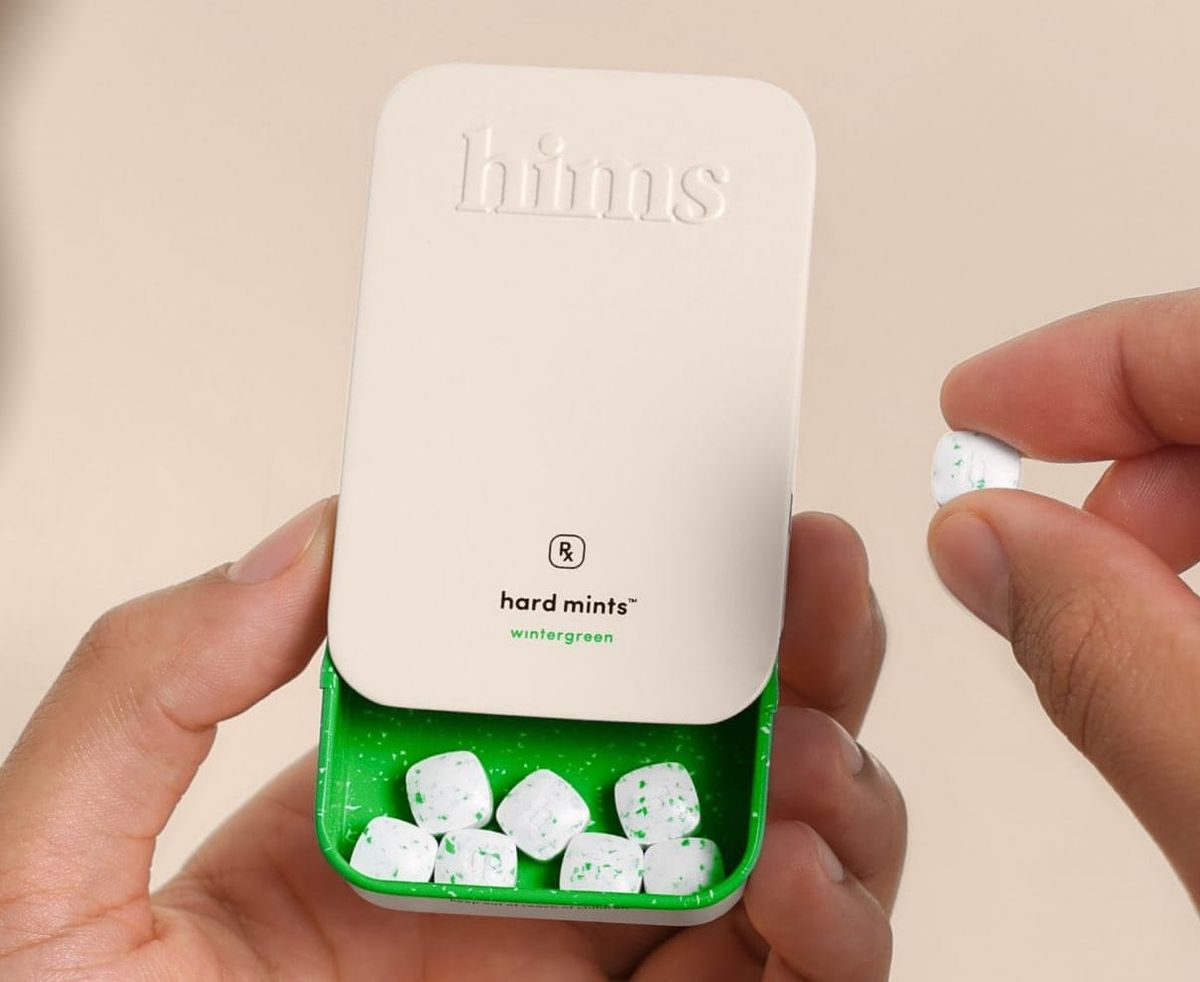
Then, the podcast advertised Hims:
Hims was founded in 2017 to sell erectile dysfunction drugs and hair loss treatments via home delivery in unmarked boxes, and soon pivoted into Hims & Hers to also sell birth control pills and menopause treatments. It has recently pivoted again into GLP-1 drugs via a partnership with Novo Nordisk (which came after lawsuits where Novo Nordisk alleged patent infringement by Hims). Hims is also going more aggressively into the digital health space after acquiring Eucalyptus, further embedding itself in the social media promotion zone.
The company’s stock has had a ride that mimics that of the MAHA movement, with its first peak coinciding with the confirmation of RFK, Jr., as head of DHHS:

Hims is not a small company. According to an analysis last week:
Hims has been able to generate revenue of $2.35 billion in 2025 at a 59% growth rate relative to 2024, in addition to net income of $128 million, EBITDA of $318 million, and 2.5 million subscribers.
Podcast ads have helped Hims and others grow rapidly during the MAHA era, as the analysts write:
Hims has grown from being a specialized telehealth platform to becoming a consumer health ecosystem with various sources of growth, including weight loss, diagnostics, hormones, and international expansion.
Hims is less of a grift than anything purporting to have adaptogen brain nutrients, but it is pushing personalized healthcare and eliminating physician involvement by offering home delivery of various tonics and potions, not all of which are indicated or effective. The combination of what Hims sells atop other medicines or issues may prove problematic, because a lot of these sales occur out of sight of legitimate medical care. There is also a class action lawsuit alleging that Hims’ compounded medicines aren’t always what they claim.
- Hims is a major ally of Dr. Google, which Swisher and company tsk-tsk.
It’s worth noting that Swisher and Galloway are both publicly bullish on GLP-1s. It’s not an irrational position, and the evidence is worth examining, but we have a long way to go before we know enough of the risks and benefits to be so enamored with them. Is their podcaster enthusiasm ad-based? It certainly isn’t entirely science-based yet, because that’s impossible.
Podcasts = Wellness Marketing Infrastructure
So, why has Swisher gone down a path that erodes her credibility as a “truth teller” about health misinformation and the wellness industry?
It’s been capitalism all along, as she might say, since podcast advertising has become a main marketing channel for the “wellness economy” over the past decade.
- The same can be said for too many OA publishers, of course. Journals aren’t as central or active, and it seems now the grifters aren’t even bothering.
The wellness space is huge, generating trillions of dollars per year across supplements, nutraceuticals, alternative medicine, and “functional” food and drinks, with the last category dominating. Probiotics (yogurts that help you poop), sleep aids, and various beverages making various claims are everywhere, with untested and potentially unsafe peptides about to join the parade in a bigger way than ever.
Podcast advertising has grown from $70M in annual revenues in 2015 to $2.4B in 2024, or 34x the size at a 38% CAGR. During this time, podcast ad spend grew from $8 per $100K of wellness revenue to $150 per $100K, a 19x increase in channel penetration.
People develop parasocial bonds with podcast hosts, a bond based on trust. This has made podcasting a major beam in the trust infrastructure of wellness commerce.
The marketing utility of podcasts is excellent for people pushing unproven treatments or making health claims:
- Trust. Hosts you know and like endorse products.
- Education. Long-read ads guide listeners to purchasing decisions.
- Repetition. Weekly or semi-weekly shows and broad campaigns across related podcasts develop brands, drive messaging home.
- Incentives. Coupon codes are measurable ways to show performance.
- Targeting. Podcasts are niche media.
Podcast advertising grew 34× because a trillion-dollar industry suddenly needed trust-based DTC marketing funnel.
Conclusion
The wellness space has the potential to overwhelm modern medicine in many ways. It’s supported by social media, unregulated, delivers big money, and now has the backing of governmental players and policies.
For her part, such a media-savvy person as Swisher should know better than to read for ads like IQ Bar or Hims if she’s going to interrogate health misinformation sources at the same time.
It’s not like this was an accident. She read for these ads, she knows they’re in the can, and she has the muscle to dictate to her podcast network the categories of ads to not put in certain topical podcast episodes. The fact that these ads appeared exactly where they would create the impression of a conflict of interest either shows complicity or carelessness. It’s certainly not the sharp execution of incisive content unencumbered by commercial entanglements we might aspire to . . .
Are you going to keep running those ads, K-A-R-A?
I share your impatience with bullshit.
