Open Philanthropy Is Neither
Effective altruism means you can avoid taxes and make more money
“Effective altruism” is the idea that you can calculate the payback on philanthropy, allowing you to give money only to projects with definite, calculable returns. It might mean not paying to grow and ship food to starving people if you think putting money toward a science fiction story about the Singularity is a better long-term investment — you know, something like one of the richest men in the world cutting USAID funding while another billionaire bolsters spending on AI to the benefit of Silicon Valley investors.
There’s an arrogance to the idea that anyone, much less Silicon Valley billionaires, can understand science and society so well that they can spend their money effectively, especially since most of its adherents got rich creating social media companies that seem to be most effective at destabilizing democracies, extracting value from creative works, and exploiting private information for profit.
- Because there is an underlying ROI behind effective altruism, public libraries probably wouldn’t have made the cut back in the days when the Robber Barons were trying to salvage their reputations by paying it forward.
A common structure for effective altruists is an LLC with non-profits or foundations (or both) below. This structure gives the owners a tax shelter for retained earnings in the non-profits while allowing them to transact for personal profit when it makes sense.
CZI LLC is one most relevant to this space, as it funds various things, most notably openRxiv. CZI LLC has an entire page of “initiatives.” These get sold off like assets from a for-profit — which makes sense, because that’s what CZI LLC is. One initiative was purchased in 2023, another in 2021, another in 2020, another in 2019, and yet another in 2019. The last one was worth $750 million in cash and stock.
There’s some real money to be made from effective altruism.
Another one of these arrangements recently made news, and it shares some elements CZI LLC has utilized.
On November 18th, one effective altruism group (Open Philanthropy) announced it was joining forces with another effective altruism group (Good Ventures) to form Coefficient Giving, yet another effective altruism group.
Using the term “philanthropy” is a little deceptive, however. Open Philanthropy was always topped by an LLC, as was Good Ventures. True to form, Coefficient Giving is also topped by an LLC. And all three are run by the same couple.
Cari Tuna and Dustin Moskovitz — the two made billions as early Facebook employees — have been the main funders of Open Philanthropy and Good Ventures. The investment management firm ICONIQ Capital is at the heart of these. CZI LLC uses this investment management firm, as well.
- ICONIQ Capital also manages at least two other Zuckerberg LLCs — Chan Zuckerberg Holdings II, LLC, and Chan Zuckerberg Holdings III, LLC.
It’s all part of what the PR mavens want us to believe is a “movement” — one led by an investment firm. Surely that hints at how the equipoise between “effective” and “altruism” resolves on a regular basis.
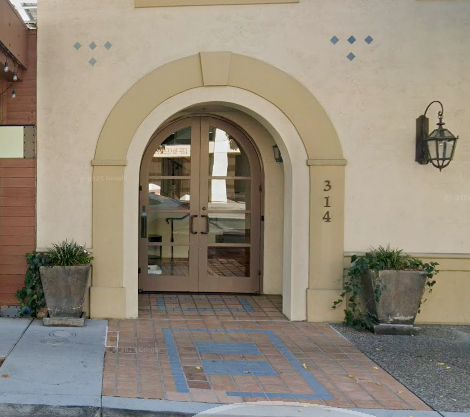
314 Lytton Avenue in Palo Alto is a hotspot for the latest companies spotlighted in this scheme. Good Ventures was based at this address. The Open Philanthropy Action Fund (the non-profit subsidiary of Open Philanthropy LLC) was based there. In what is surely nothing shady, in 2023 Good Ventures paid $18M from one pocket at 314 Lytton Avenue (Good Ventures Foundation) to another at 314 Lytton Avenue (Philanthropic Services Corp., a non-profit) to administer grants. This way, the in-house payments from Pocket A to Pocket B weren’t taxed.
314 Lytton Avenue is next to a sushi shop, and is pictured above. Coefficient Giving’s new address is apparently a UPS Store mailbox in San Francisco.
So, while there are tax-free subsidiaries and some grant-making, Tuna, Moskovitz, and others are at the LLC which governs the whole smear and from which they can derive personal benefit from investments. And they are paying themselves tax-free to administer the grants.
And all of it — openRxiv, Open Philanthropy, Good Ventures, Coefficient Giving — is funded by the profits from Facebook stock sales over the years, creating tax shelters for early executives (Cari Tuna and Dustin Moskovitz) and Mark Zuckerberg and Priscilla Chan.
Two married couples with a deep history are running the bulk of the effective altruism game.
It’s another reminder of what Anand Giridharadas wrote about recently related to the Epstein files — a borderless network of people connected not to nations or their fellow citizens but to each other, exchanging nonpublic information and capital so members can control events.
Sadly, by sheltering billions from taxes in this manner, these effective altruists are tilting the playing field away from truly democratic investments in science and toward oligarchic investments in science — and, because of the LLC structure, they are doing so in a manner that has already made them richer because they can sell some of the initiatives as assets.
Philanthropy-washing with an investment manager guiding billions to burnish reputations while making two mega-billionaire couples more money — that seems to be what “effective altruism” is at its heart for these people. Sure, some money leaks out, but the owners are effectively shielding their retained earnings from taxes while they find new investment targets, taking profits when they identify them, and avoiding taxes when they don’t.
That’s pretty effective altruism — for them.