Pod: “Worship of Tech, Fear of Tylenol”
When a product poses a danger, why is there a double-standard?
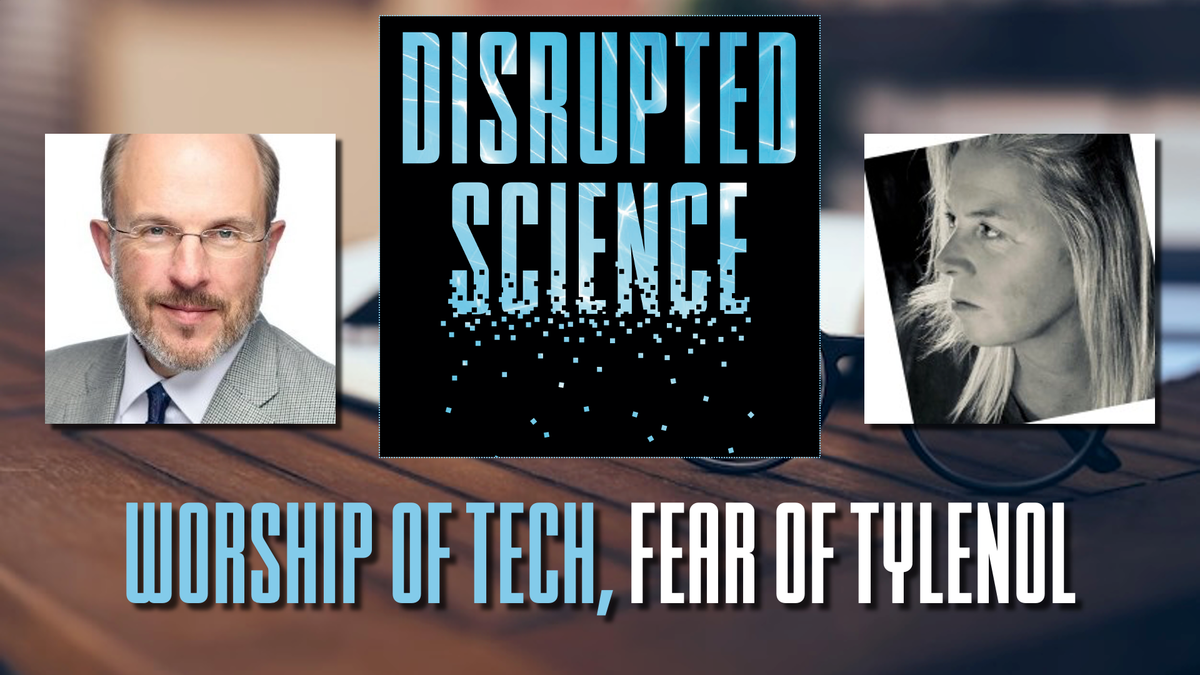
A question has been lingering for us, and today we finally address it — Why does tech avoid the kind of scrutiny we give everything else?
In light of the recent suicide attributed to use of ChatGPT according to a lawsuit filed by the teenager’s parent, the issue of product dangers arose again, causing many to reflect on the history of Tylenol, which was especially salient given how the pain reliever has been tied to autism without any strong evidence.
You may be old enough to remember the days in 1982 when Tylenol was pulled from shelves after an unknown person laced some powder-filled capsules with potassium cyanide, leading directly to seven deaths and indirectly to several more deaths from copycat crimes. Tylenol’s makers responded immediately and definitively, emptying shelves of the pain reliever, testing every link of their supply chain, eliminating capsule formulations from their product line, and restoring the product only after they had established new packaging elements like a foil seal, among other things, which would show if a bottle had been tampered with.
Yet, today, technology products strongly associated with teen self-harm and depression, political strife, regional genocides, and suicide don’t have a similar worry of liability. Section 230 takes care of that.
Oddly, even the public seems to cut technology companies some slack. After all, technology is the future, and these are feisty start-ups . . . or they were, until about 20 years ago, when they began to dominate every aspect of our lives, including our economy.
So, why do we seem unable to talk about tech’s problems as if they’re problems like those in any other product category? We recall autos, chicken, and cribs all the time when there is even a whiff of concern about an element failing and causing problems, but tech gets a pass.
Is it because we worship tech?
The rise of technological beliefs and the strengthening of religious fundamentalism is something one academic feels go hand in hand:
For a thousand years in Western culture, the advancement of the mechanical arts — technology — has been inspired by deep religious desires of transcendence and redemption. Although currently obscured by secular language and ideology, the contemporary resurgence of religion, even fundamentalism, alongside and hand-in-hand with technology is thus not an aberration but simply the reassertion of a forgotten tradition. If you don’t recognize and understand how religious and technological transcendence have developed together, you'll never be able to successfully counter them — much less recognize when they might be developing within you as well.
Looking at the current environment of technology, the transcendence theme runs strong — the Metaverse, cryptocurrency, and generative AI all hint at a virtual and superior extra-corporeal path we can choose to pursue, with hopes of immortality often placed front and center. Who can forget the first mainstream attempt at virtual world, Second Life? You can’t get more on the nose . . .
The more blatant religiosity of the Singularity and the death cult described in Adam Becker’s book, More Everything Forever: AI Overlords, Space Empires, and Silicon Valley's Crusade to Control the Fate of Humanity only underscore the fervent drive for transcendence and immortality fueling much of the hype around these otherwise questionable technologies and their meh products.
As Karen Hao writes:
Blake Lemoine, an engineer on [Google’s] newly re-formed responsible AI team, grew convinced that the company’s own large language model LaMDA was not only highly intelligent but could be considered sentient. He said this was not based on a scientific assessment but rather on his belief, as a mystic Christian priest, that God could decide to give technology consciousness. “Who am I to tell God where he can and can’t put souls?” he wrote.
Into this techno-fundamentalism, we have non-scientists and non-experts using technological amplifiers like social media to promulgate fears about things science signed-off on years or decades ago — Covid-19 vaccines, acetaminophen, and various dyes and oils. They also feed hopes that by addressing your individual medical needs, which certainly must be unique, you can live longer, better, and flourish in every way imaginable. Your sexual vitality, financial prospects, and social renown will all increase.
It’s all a grift based on promises of personal transcendence — we can help you improve your health while your doctor will just tell you what she tells everyone else, while giving you that dull old science with its hopeless truths about mortality and aging.
Vaccines are another target because they diminish our sense of being special given their 95+% efficacy. After all, if we’re all pretty much the same, it’s harder to believe you can transcend the mundane.
Exceptionalism is the first step of transcendence.
And then there’s OA, a religion-tinged techno-utopian vision of information informed by the larger Silicon Valley model of advertising-funded “free” information. The overtones of transcendence are striking when you revisit establishing documents like the Budapest Open Access Initiative’s founding statement:
An old tradition and a new technology have converged to make possible an unprecedented public good. The old tradition is the willingness of scientists and scholars to publish the fruits of their research in scholarly journals without payment, for the sake of inquiry and knowledge. The new technology is the internet. The public good they make possible is the world-wide electronic distribution of the peer-reviewed journal literature and completely free and unrestricted access to it by all scientists, scholars, teachers, students, and other curious minds. Removing access barriers to this literature will accelerate research, enrich education, share the learning of the rich with the poor and the poor with the rich, make this literature as useful as it can be, and lay the foundation for uniting humanity in a common intellectual conversation and quest for knowledge.
Rife with the language of transcendence, with a lot of people in scientific publishing so devoted to it that they refuse to accept the evidence of its downsides and lack of evidence of its presumed upsides, OA publishing has been corrupted and co-opted in ways reminiscent of how many religious movements have been over time.
So it’s no surprise that the paper used as the centerpiece of the MAHA movement’s unscientific claims about Tylenol and autism was published in an OA journal published by BioMed Central, which Jan Velterop, a signatory of the Budapest Open Access Initiative statement, initially led.
As of 2025, tech, science, and scientific publishing have become quite faith-based. It may all step from a worship of tech as our modern source of transcendence.
It’s all deeply anti-science and at-odds with evidence.
Let’s discuss . . . and we share our “Discoveries of the Week.”
Subscribe today
- Subscribe on Apple Podcasts
- Subscribe on Spotify
- Subscribe on Amazon Music/Audible
- Subscribe on YouTube
Music provided by Provoke the Truth — https://provokethetruth.net/