Review: “God, Human, Animal, Machine”
A contemplation of religion, science, soul, and reality might make you think harder
Meghan O’Gieblyn is an essayist with a background in theology and philosophy. I stumbled across her 2021 book God, Human, Animal, Machine recently, and it is one I recommend whole-heartedly.
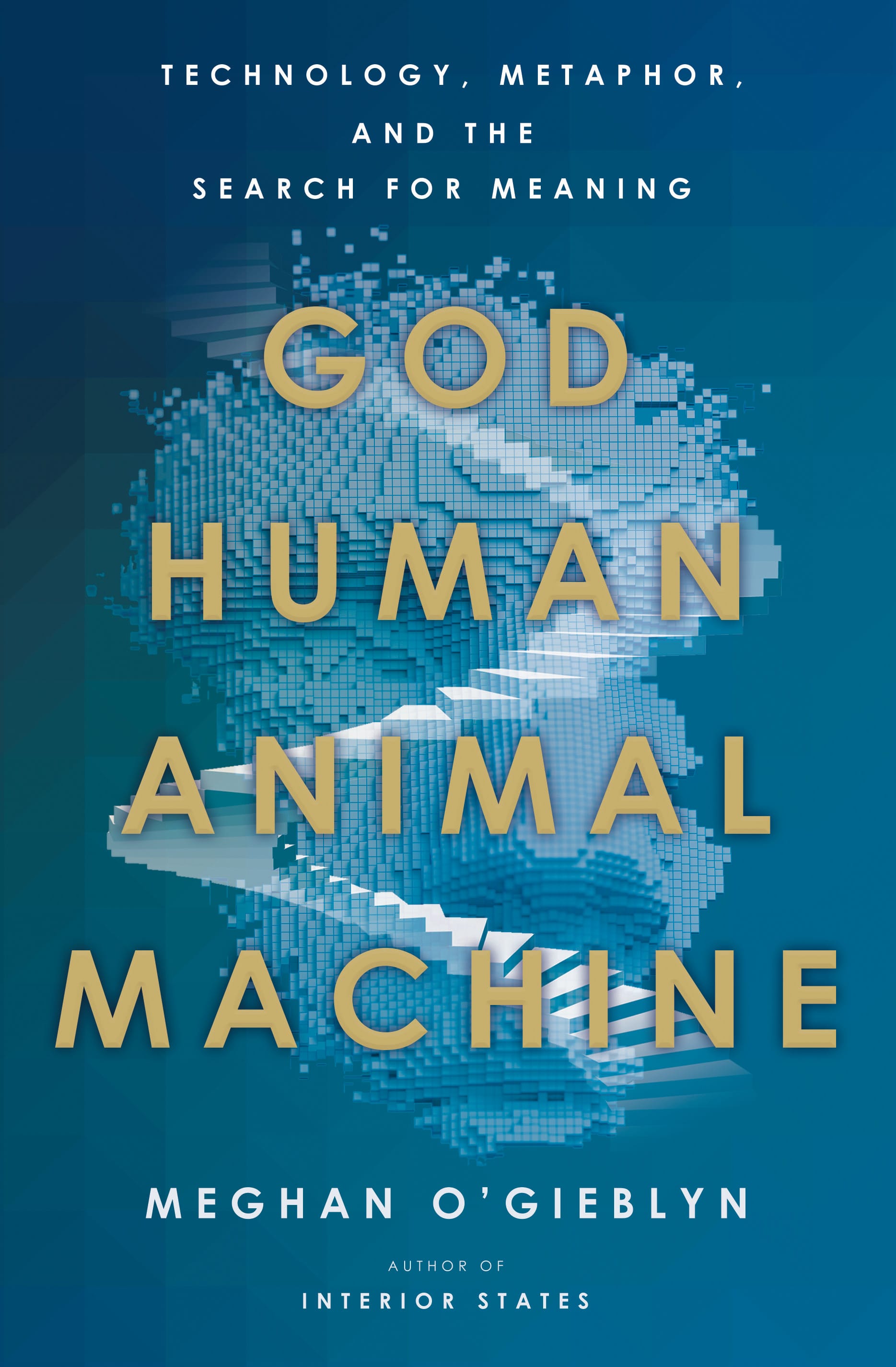
O’Gieblyn effortlessly weaves personal narrative, historical perspectives, scientific theories, technology claims, and religious philosophies together in ways that at least for me made how we’re talking about science, technology, and humanity these days seem superficial and ahistorical.
And quasi-religious, a feeling that began in scientific publishing with the OA movement and which has continued with network effects, Big Data, and AI as stand-ins for God in some ways — if only we clap hard enough, Tinkerbell will deliver us to the Singularity.
Starting with her experience using a robotic dog and the deep unease this created on multiple levels, all explained beautifully and with great branching into related historical and philosophical issues humans can’t seem to escape, the book earns every profound moment, every sentence that packs a punch, and every section that bears rereading.
Can we experience reality? Are we always reinventing God? Are we condemned to always be looking in the mirror? These are some of the deeper questions O’Gieblyn explores.
The book is divided into sections and tied together loosely by a repeated contemplation of the Book of Job and its implications for humans. That story persists in our world because it is a conundrum of faith and reason. The dilemma of Job has transformed as new technologies, bureaucracies, and human roles have emerged, reappearing in fiction again and again. The Brothers Karamazov was Dostoevsky’s recasting. We are facing it without knowing it today with AI.
From golems to networks, how we define information and its role, humans and their roles, and the divine as the unknowable — it’s all on the table, and beautifully explored.
One section in the chapter “Algorithm” brings Hannah Arendt, Jaron Lanier, Chris Anderson, and Ray Kurzweil into useful contrast, with O’Gieblyn writing:
For Arendt, the problem was not that we kept creating things in our image; it was that we imbued these artifacts with a kind of transcendent power. Rather than focusing on how to use science and technology to improve the human condition, we had come to believe our instruments could connect us to higher truths. . . . The problem is that a vantage so far removed from human nature cannot account for human agency. The view of earth from the Archimedean point compels us to regard our inventions not as historical choices but as part of an inexorable evolutionary process that is entirely deterministic and teleological, much like Kurzweil’s narrative about the Singularity. . . . This is more or less what Jaron Lanier warned about in his response to Chris Anderson’s proposal that we should abandon the scientific method and turn to algorithms for answers. “The point of a scientific theory is not that an angel will appreciate it,” Lanier wrote. “Its purpose is human comprehension. Science without a quest for theories means science without humans.” What we are abdicating, in the end, is our duty to create meaning from our empirical observations — to define for ourselves what constitutes justice, and morality, and quality of life — a task we forfeit each time we forget that meaning is an implicitly human category that cannot be reduced to quantification.
Yet, we accept again and again that black-box machines “solving” maths or folding proteins or summarizing scientific reports represent godlike knowledge and power. Can that be true? Or does it require blind faith ala Job to allow these claims without contention, evidence, or interrogation? And how did that turn out for Job?
It’s rare to read a book like this — sublime, well-grounded, beautifully written, and erudite. It reminds me of the best of Carl Sagan, the kind of book that takes you out of the daily blender of nonsense and recenters you on the big issues, the big questions, and the big humanity of it all, reminding you to keep history, philosophy, religion (as philosophy), science, and people front and center.
The essay on virality and the observations of how our obeisance to network theory has elevated the relationships of information over the quality of information — and, therefore, the network map of humans as valuable over the individual — comes late, but is perhaps the most rattling part of the book.
This book may rattle you.
And that’s a good thing.
HIGHLY RECOMMEND.