A Restatement of Principles
Years into this, it’s worth revisiting the fundamentals
The scientific and scholarly publications system remains in turmoil. The latest worrisome trend is the degradation of great epistemic brands like NEJM and JAMA via their fairly thoughtless embrace of LLMs (and JAMA’s problematic embrace of OA). Meanwhile, we continue to be played predictably by commercial interests and technology behemoths, with a new preprint on medRxiv leading to one company boasting about its gains on the Paris Stock Exchange because of their unreviewed claims posted on a platform owned by CZI LLC, with the content further exploited by Meta’s LLM.
With all this going on and after more than seven years (and another half-dozen at “The Scholarly Kitchen”), it seems a good time to check in on some fundamental approaches.
After all, drifting from core principles can happen all too easily, while clinging to some that need to be modified or abandoned can stultify thought and create traps.
- We’re experiencing this in America now. We’ve drifted from core principles in a big way in just one year.
- Other principles will need to be modified to prevent a recurrence of what has transpired — money in politics, regulation of tech, and more.
- However, if tomorrow we returned to honoring existing laws, rules, oaths, adherence to evidence, and social norms of tolerance and fair play, it would feel like absolute progress.
- Other principles will need to be modified to prevent a recurrence of what has transpired — money in politics, regulation of tech, and more.
As for this particular newsletter, thousands read, share, and resonate with the ideas presented here. That’s a strong indication something is working.
Whether this is a contributor or not, it’s heartening to see the tide shifting in healthy ways as the extraction and distraction of the digital economy and its various predations become clearer to more people.
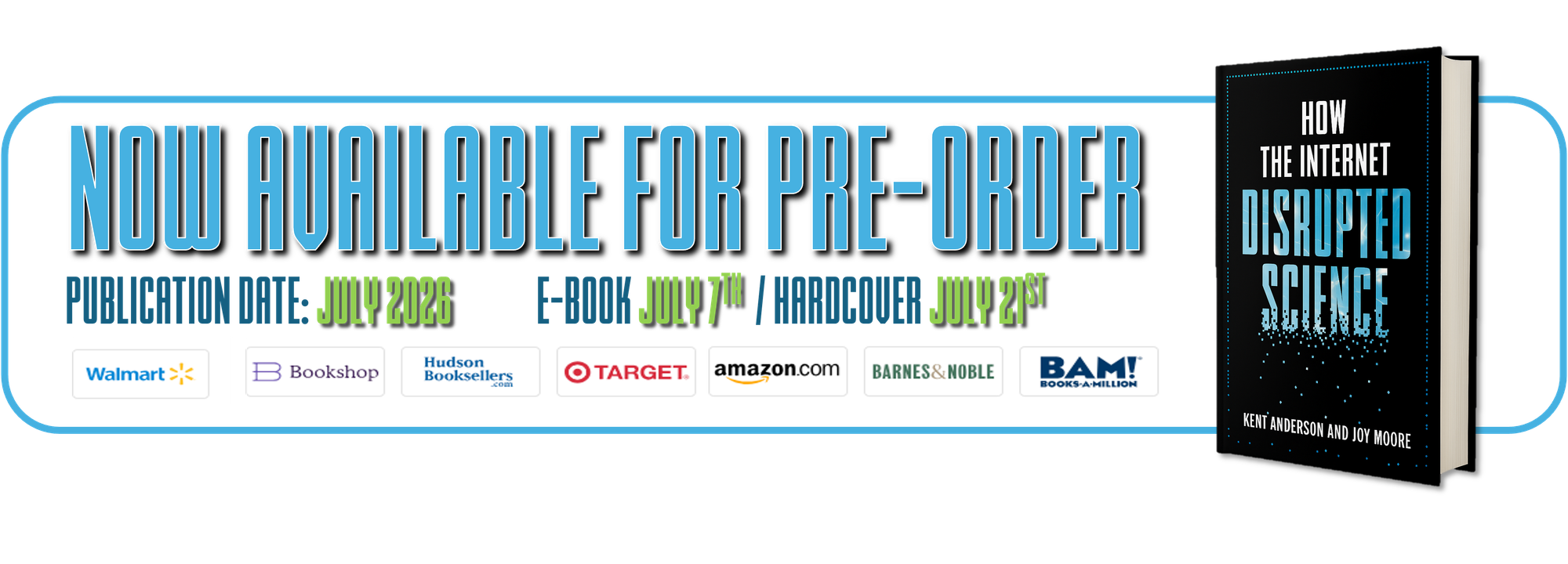
And the work is at least for now culminating in a book.
Working on the book and podcast with Joy Moore has expanded the roster of interested parties to include some truly remarkable experts devoted to interrogating, defending, and understanding technology, public health, science, and the world we live in. It’s been a bonus.
First Principles
Fundamentally, “The Geyser” was founded in 2018 on a concept borrowed from Jaron Lanier — “optimistic criticism” — which he described as follows:
. . . criticism has . . . optimism built in. . . . I think in the very act of criticizing it I’m expressing a hope that we’ll find our way out.
I also believe that a main guide is the legend of Cassandra:
Cassandra was right.
Also:
So was Colin Kaepernick.
Finally, I will add a tip of the stovepipe hat to Abraham Lincoln:
Be sure you put your feet in the right place, then stand firm.
“The Geyser” has proven more central than I imagined. I see the open rates. I know the subscription list. I hear about all the forwarded emails. I see the consistent growth. And now we have a book in press, which should expand the audience in new ways.
With C-suites of most if not all of the major commercial and society publishers reading, as well as editorial leaders and large professional staffs, hewing toward optimistic criticism seems to have been a good long-term choice.
Critiques mean not turning a blind eye to the future, but training a better eye to make clearer choices for that future.
Critiques don’t blanche. Focusing on incentives, hypocrisy, and hype seems like the right way to at least begin to develop critiques. Doing so also helps ferret out information people either want to suppress or simply haven’t troubled themselves to test.
And I think it’s still a role that needs to be filled.
As an industry, we have repeatedly fallen hard for narratives that have proven misaligned, damaging, and misleading — that OA was inevitable and uniformly a good thing, that technology companies represented a better future, that crowdsourcing would beat expertsourcing, and that power in the hands of computer scientists could be trusted as de facto democratizing. These and a litany of other misconceptions have gotten us into a really worrisome territory as a society and as scientific communities. Publishing’s fast-follow habits have led to an abdication of our role in science and society, so now the bastards are winning. Our elevation of the attention economy over the knowledge economy has buried us in nonsense. We unilaterally disarmed — dropping paywalls, peer-review, press embargoes, and strong professional norms — in order to play a Big Tech game that looked promising for a minute but soon revealed itself to be a scam. Now, we have to rebuild on solid ground or face irrelevance and failure, sad to say.
The rise of techno-authoritarians, the consolidation of power outside of democratic controls and regulations, the exploitation of our work and infrastructure, and the emergent network states that have come to exist via the platform economy are all realities that should make anyone hoping for a better tomorrow — someone optimistic about the future — pause and reflect on how to achieve it given these realities.
This isn’t pretend. Those seeking control are playing for keeps.
- The funding cuts, decimation of institutions, attacks on universities, measles, and murders are real.
I think we all hope things can improve from this admittedly depressing new baseline.
So as we enter 2026, and what may prove to be a very bumpy year, let’s not forget why we share this space — to criticize what can be improved because we care, to realistically evaluate technology and the power sources it generates because we have to make good decisions, and to do all of this because we’re optimistic about the positive changes we can bring to the future.
And because we know that science is about discovering that future.
Thanks for reading. Two aligned organizations who might want your help are presented below.