Pod: Let’s Talk Impact Factor
The constraints upstream are disrupted, and that spells trouble downstream
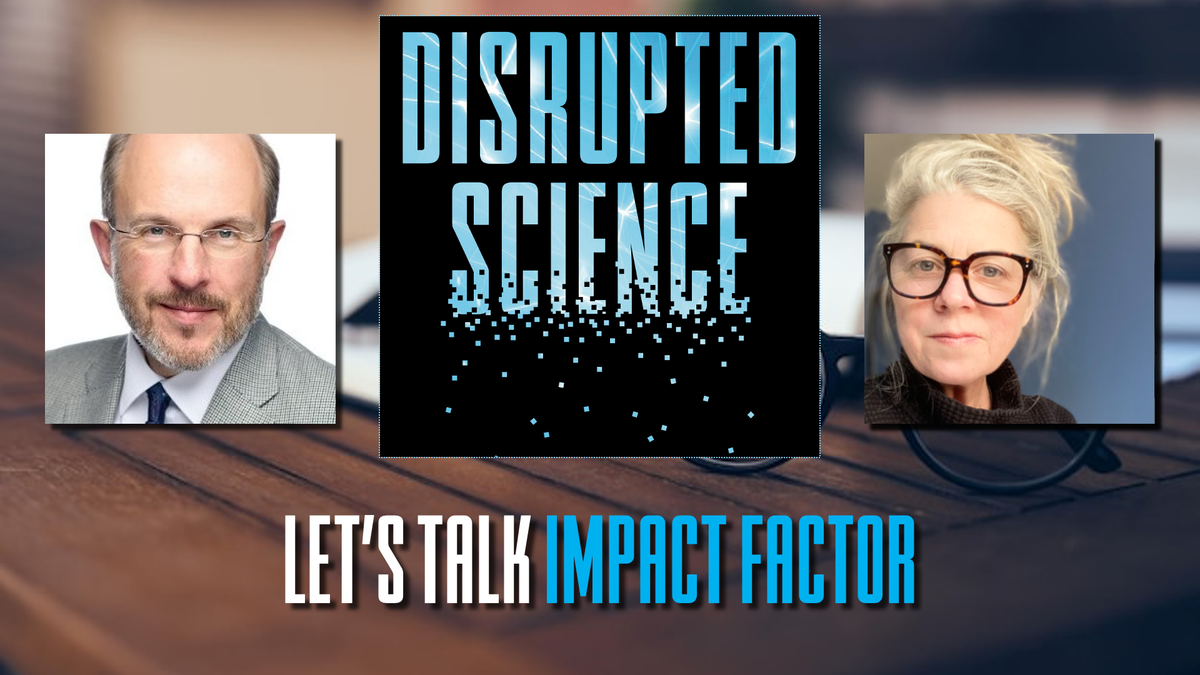
Quantification as proxy for qualification of scientific and academic publications has been around for a very long time.
Today, we touch a little on the history of bibliometrics and scientometrics, but not as much as in the chapter in our book entitled “Everything Counts, Nothing Matters,” where we go into the metrics of it all over the last 30 years.
Griping about the JIF has been going on for decades. “Responsible use” or “don’t count it” per DORA “should” statements, etc., and to no avail because in the end the JIF is a commercial product that influences careers, university rankings, and provides fodder for profit-driven publishers all over the world.
Garfield created the JIF to solve a practical problem, and his solution was ingenious. Rather than hiring legions of indexers to figure out which papers were furthering scientific inquiry, he could observe what their fellow researchers were doing via citations and sell the data back to the producers (publishers) and consumers (libraries).
Constraints on publication made it a reliable measure of centrality in a community. Disrupting constraints on publication via cascading portfolios, pop-up journals, special issues, AI slop, and preprints has compromised the JIF. Researchers no longer recognize lists of high impact journals in their fields.
Clarivate has not addressed in their marketing copy how their 2026 product accounts for what is actually happening in scientific publishing today. They highlight “transparency,” “publisher-neutral,” “6th decade of trust,” and “responsible use,” but the reality is that what they are selling includes fake citations, fake papers, real citations to fake papers, real papers citing fake papers, paid-for authorships, author appropriations, journals that have gone hybrid or OA getting rankings boosts because they are easier to be cited, including by AI, etc.
- There is a more subtle problem — the JIF is still a lagging indicator which is weird in the modern age.
What Clarivate has done is conflate the attention economy with the scholarly record by expanding their source publications to scale with the market that has exploded.
What’s different today, even moreso than a year ago, is that the tricks and schemes to use scientific papers as currency for various reasons are known, and turbo-charged by AI.
- There’s also a double marketing hit here, all to Clarivate’s advantage. Clarivate announces the release of new IFs. Publishers freak out among themselves reinforcing the product. Then publishers promote their new IFs to customers like authors and libraries. One announcement and two major reinforcing marketing campaigns Clarivate doesn’t have to pay for.
- Is Clarivate just squeezing the juice out of the JIF and associated products because they are too big, too entrenched globally to fail?
We’ll be talking more about this in the coming months. But we wanted for now to have a frank conversation about the JIF during “announcements week.” It’s our effort to make you a little more aware of what’s going on in the trust marker and metrics space from our point of view.
Joy’s Discovery of the Week
Subscribe to our podcast
- Subscribe on Apple Podcasts
- Subscribe on Spotify
- Subscribe on Amazon Music/Audible
- Subscribe on YouTube
Music provided by Provoke the Truth — https://provokethetruth.net/