The OA Movement Made MAHA
From conspiracies to commercial citation stacking, the evidence is compelling
After years of watching and waiting for someone to put 2 + 2 together, three authors writing a letter to the European Journal of Clinical Nutrition finally delivered with this:
In nutrition, where pseudoscientific claims can directly influence dietary choices and long-term health, the stakes are particularly high. Combating this phenomenon requires coordinated action by universities, funding agencies, professional societies, and policymakers to uphold rigorous editorial standards and to reform the economic structures that make researchers vulnerable to exploitative APC models and low-cost predatory outlets. Supporting financially equitable systems, such as community-governed or non-APC publishing models, is essential to reducing this vulnerability.
Yes, indeed — incentives predict the outcome, money is a key incentive, and Gold OA is not “just another business model” but a different set of incentives that created a vulnerability via a conflict of interest — editorial budgets and publisher revenues either partially or fully dependent on how many authors pay to publish (and, how lax or strict the publishers and editors are). The temptation is to lower standards and increase throughput. The incentives demand it.
As a result, we’ve seen some can be incredibly relaxed about standards, if not outright predatory.
Never satisfied, the OA movement even went beyond “the article economy” of Gold OA to enable unreviewed preprints across the board, but most importantly in biomedicine via bioRxiv and medRxiv — right in the MAHA sweet spot.
The vulnerability began to look more like an invitation.
Now, after years of grifting on the side with products validated by “peer-reviewed research” published pay-to-play in Gold OA journals, we have the Make American Healthy Again (MAHA) movement, which is now fully baked with revived conspiracies, fresh pseudoscience, and fake information.
Where did it come from? How did it gain traction in the scientific literature?
While it’s a longer story than we have time for here, the OA movement and its “free information” offshoots have played a massive role worth enumerating a bit:
- Functional medicine — From Mark Hyman to Casey Means, the idea of overcharging people for useless, poorly described personalized medicine tests and the soothing words of overpaid charlatans — oh, sorry, I meant “functional medicine” — got its blessing via a paper published in 2019 in JAMA Network Open, a Gold OA journal. Most of the other support in the literature is also in pay-to-play OA journals.
- Ivermectin — A preprint on Research Square took the fringe idea that ivermectin might help in some human disease and put it squarely into the press. It was then withdrawn, but not entirely (3/4 versions went unmarked), and the drug is still used in unapproved cocktails sold to unsuspecting souls.
- Myocarditis from Covid-19 vaccines — A preprint with a major mathematical error posted on medRxiv in 2021 and withdrawn in short order created an enduring myth about Covid-19 vaccines causing myocarditis. The myth has been used to undermine vaccination policies under RFK, Jr.
- Cell phones and brain cancer — First published as a preprint because no journal would touch it, this expensive rat study created a lot of media hype and controversy when it was first posted years ago. Persisting in conspiracy land and brains that seem to be fighting decades-old battles (with food pyramids, for instance), it has been recently revived by RFK, Jr., to propose banning phones or simply to scare people.
- AG1 (Athletic Greens) — The first green juice (an even sillier green gummy with a fuzzy fake green science bear as its mascot would follow), AG1 used numerous “special issues” and papers in Frontiers and MDPI journals, all paid for by AG1 and “edited” by Jeremy Townsend, AG1’s science guy.
- Bovine colostrum powder — Another fairy dust grift, 83% of AMRA’s science claims were placed by authors paying the publishers.
- Fluoridation and IQ — We’ve talked about this one enough, but RFK, Jr., was able to revive eugenics-adjacent, Cold War era, unscientific fears about fluoride in our drinking water thanks to a Gold OA review in JAMA Pediatrics. Two states eliminated fluoridation in drinking water as a result, with more likely to follow.
- Peptides — The latest grift to be embraced in an official capacity at HHS with a push for approval across compounded, unproven injectables and high-ticket providers with an inside track in MAHA, a recent analysis showed that 64% of the papers about these in the last 10 years were published Gold OA (pay-to-play) in MDPI journals.
- Post-vaccination syndrome — We may have actually been able to thwart this attempt to lay the groundwork for vaccination lawsuits — at least so far. This has to do with MAHA-adjacent preprints, a terrible, unblinded “study as support group as potential litigant priming,” and a cyberlibertarian editor who really should know better. More fodder for the anti-vax crowd, and all this is still circulating heavily in the space, especially after a recent meaningless (legally) but useful (rhetorically and conspiratorially) consent decree the “Disinformation Dozen” is celebrating.
- Microplastics alarmism — Another bit of silliness (it might all be mistaking fat for plastic or handling samples with plastic gloves, or both), microplastics fear-mongering kicked into high gear for MAHA with a flawed OA paper that was also preprinted, with the authors using scare tactics publicly while saying the evidence was inadequate in their flawed paper. Now, microplastics alarmism has created a new MAHA acronym (STOMP) and exploitation vector.
There are other MAHA topics a brief review suggests are also being driven by pay-to-play Gold OA article placements, special issues, and preprints — seed oils, glyphosates, food dyes, parabens, and more.
On top of the way these pay-to-play papers and unreviewed preprints infiltrate discovery services and indexing services like PubMed and PMC, they also find their ways into LLMs like OpenEvidence, as we’ve documented numerous times.
Gold OA and preprints, and the “open” movement writ large, seem to have helped to enable, validate, and accelerate pseudoscience claims.
Did OA make MAHA?
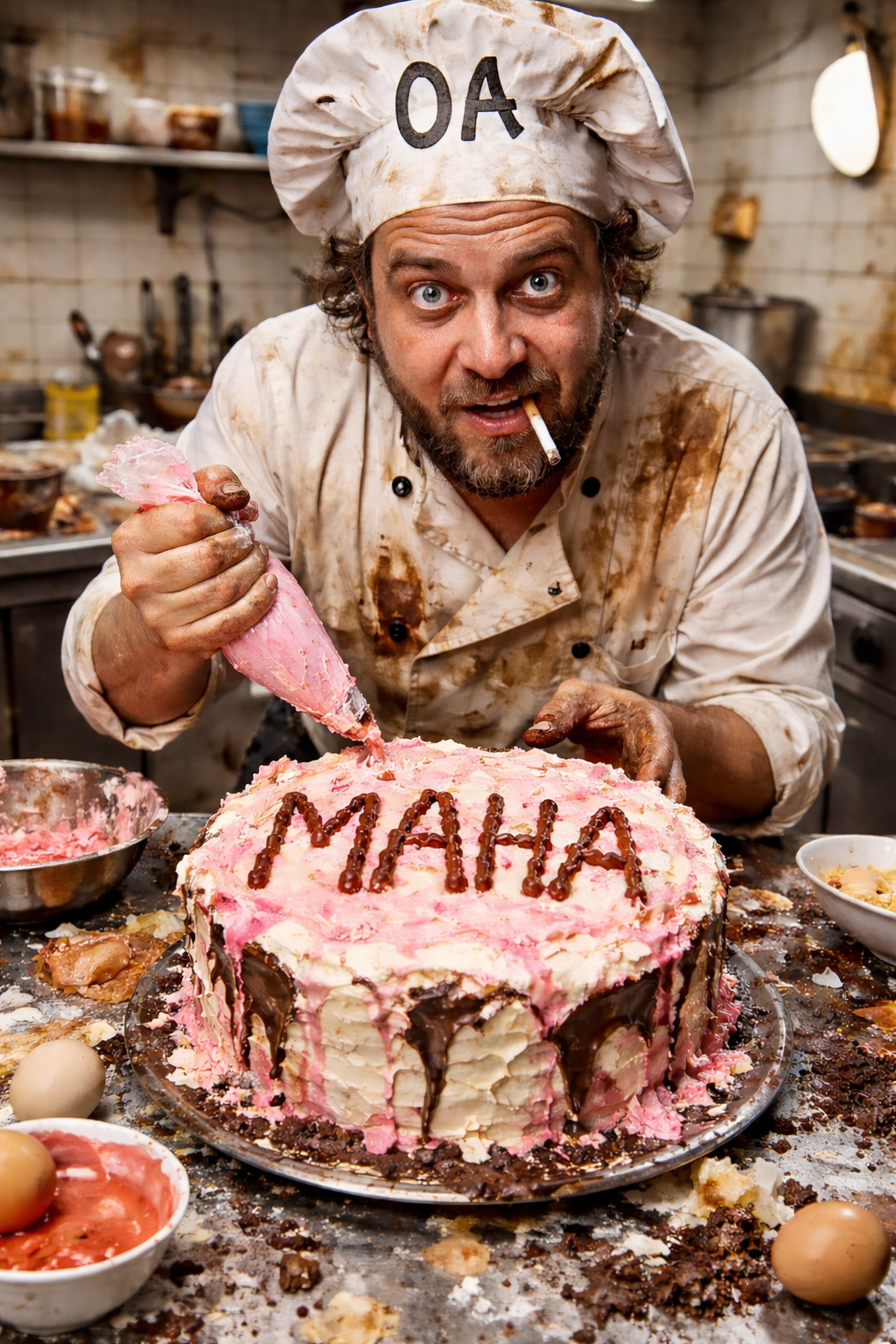
It certainly has spread a thick pseudoscientific icing on the cake.